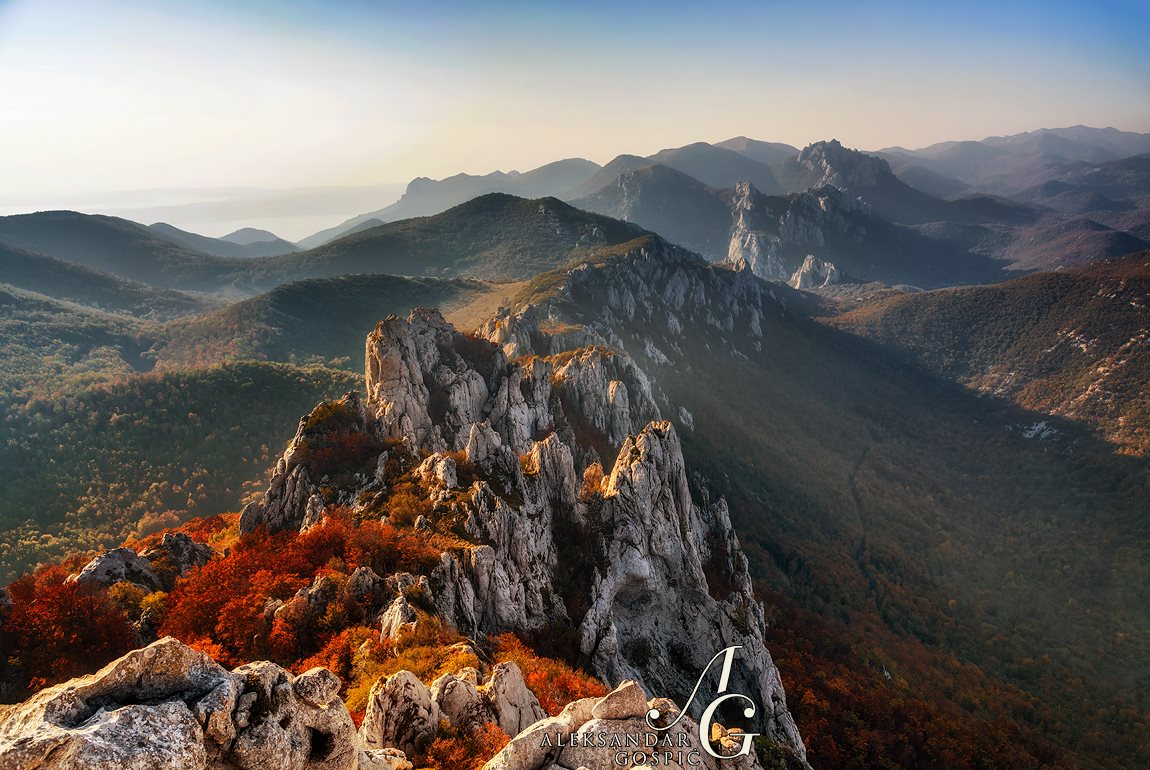
O selu Crni Dabar je smješten u dubokoj planinskoj udolini na južnom dijelu Srednjeg Velebita. Specifičnost područja dabrova su niske nadmorske visine u samom središtu masiva, što je između ostaloga omogućilo cjelogodišnji boravak i formiranje naselja. Smještena na 675 m.n.v. udolina je izrazito pravilnog elipsastog oblika okvirnih dimenzija 0.9x2.0 km i prostire se u smjeru istok-zapad. Okružena je brojnim 500-600m višim vrhovima: Žuljev vrh (1314m), Crnomušina (1314m) i Razvršje (1210m) sa sjeverne strane, Trnova glava (1101m) i Kameniti vršak (1037m) sa istočne i dramatičnim bedemom Dabarskih kukova (1081m-1274m) na jugu.
Trajna naselja u području srednjeg Velebita počela su nicati krajem 17. stoljeća, nakon što su Osmanlije otjerani iz tog kraja. Tada su našu najveću planinu prekrivale bujne šume, pa su prvi stanovnici morali paliti guste jelove šume i krčiti raslinje da bi se mogli naseliti. Ravni Dabar, Crni Dabar i Došen Dabar su susjedna sela čija imena označavaju duboku kotlinu, “udol” usred visokih obronaka. Takva dolina ima oblik korita i nema vode. Riječ “dabar” je vrlo stara i praslavenskog je podrijetla (*dъbrь), a množina glasi “dabri”. Između dabra kao životinje i dabra kao krškog reljefnog oblika postoji i razlika u izgovoru. Ako se misli na lički dabar, prvo “a” izgovara se kratko, kao da se proguta prvi slog.
Kao prvi stanovnik Crnog Dabra spominje se 1683. Dilinoga Devčić s obitelji, koji je Osmanlijama navodno krao stoku. Život je kroz povijest bio težak, a stanovništvo se moralo boriti protiv neprijatelja, zvijeri i teških vremenskih neprilika. Gorštačko stanovništvo je živjelo tradicionalnim patrijarhalnim načinom života, prilično izolirani jer su bili dostupni jedino pješke. Nekoć selo puno života u potpunosti je opustjelo 1980. godine kad su ga napustili posljednji stanovnici. Kako nije bilo cesta napuštajući rodno selo mogli su sa sobom uzeti onoliko koliko su mogli nositi u zavežljaju penjući se strmim planinskim stazama. Glavni i najvažniji razlog napuštanja sela je bila neizgrađena cestovna infrastruktura. To je bio politički način obračuna ondašnje vlasti s ciljem potpunog raseljavanja stanovništva i zatiranja svakog traga o postojanju života ljudi na tom prostoru. Kroz čitave živote nekadašnjih stanovnika provlači se nit žala i tuge za ugašenim ognjištima i napuštenim domovima. Nakon dugog čekanja 2014. je napokon napravljena cesta do sela te je na temeljima stare napravljena nova kapelica Sv. Mihovila zaštitnika sela. 29. rujna na dan Sv. Mihovila se svake godine okupe nekadašnji stanovnici i njihovi potomci kako bi se prisjetili života koji je nekad postojao u srcu Velebita.
Dabarski kukovi U reljefu 143 kilometra dugačkog velebitskog masiva, posebno mjesto zauzimaju Dabarski kukovi u blizini Baških Oštarija. To je niz oštrih stjenovitih vrhova koji su se poput golemog zida, izranjajući iz zelenih dabarskih šuma i travnatih dolaca, ispružili smjerom usporednom s jadranskom obalom. U tom rastrganom nizu najviše se ističu Bačić kuk, Kukaline, Butinovača, Kiza, Grabar i Ljubičko brdo. Uzduž njihova sjeveroistočnog podnožja nalazi se niz prostranih kraških udolina, među kojima su tri najveće poznate pod imenom dabri (Crni, Ravni i Došen dabar) i dulibe (Bačić duliba, Došen duliba i Crna duliba). Najslikovitiji vrh Dabarskih kukova je Kiza (1274 m) na vapnenačkom grebenu u kojem se isprepliću mnogobrojni okomiti i kosi kukovi različitih oblika. Premda vrh nije osobito visok, zahvaljujući istaknutom položaju, vrh Kize je vrlo zahvalan vidikovac.
About Crni Dabar
Crni Dabar is located in a deep mountain valley in the southern part of Middle Velebit. The uniqueness of the Dabar area is the low altitude amidst the massif, which, among other things, enabled a year-round stay and the formation of settlements. Located at 675 m the valley is distinctly elliptical in shape with approximate dimensions of 0.9x2.0 km and extends in an east-west direction. It is surrounded by numerous 500-600m higher peaks: Žuljev vrh (1314m), Crnomušina (1314m) and Razvršje (1210m) on the north side, Trnova glava (1101m) and Kameniti vršak (1037m) with the eastern and dramatic ramparts of Dabarski kukovi (1081m-1274m ) in the south.
Permanent settlements in the area of central Velebit began to emerge at the end of the 17th century, after the Ottomans were expelled from that area. At that time, Croatia's largest mountain was covered with lush forests, so the first inhabitants had to burn dense fir forests and clear vegetation in order to settle. Ravni Dabar, Crni Dabar and Došen Dabar are neighbouring villages whose names mean a deep valley, "valley" in the middle of high slopes. Such a valley has the shape of a riverbed and no water. The word "dabar" is very old and is of Proto-Slavic origin (* dъbrь), and the plural reads "dabri". Literal translation of words crni and dabar would be black beaver. There is a difference in pronunciation between the beaver as an animal and the beaver as a karst relief. If we mean the settlement name, the first "a" is pronounced briefly, as if swallowing the first syllable.
Dilinoga Devčić and his family are mentioned as the first inhabitants of Crni Dabar in 1683, who allegedly stole cattle from the Ottomans. Life has been difficult throughout history, and the population has had to fight enemies, beasts, and severe weather. The highland population lived a traditional patriarchal way of life, quite isolated because they were only accessible on foot. Once a village full of life, it was completely deserted in 1980 when the last inhabitants left. Without roads people could only take with them as much as they could carry in a bundle climbing steep mountain trails. The main and most important reason for them leaving their home was lack of any modern infrastructure making people's life in the middle of 20th century heavy as life of their predecessors 200 or 300 years before. Crni Dabar was a stronghold of those who opposed communist regime that got into the power after WW2 and as a punishment for that, government wasn't interested in building any kind of infrastructure for the inhabitants. Government aim was complete displacement of the population and erasure of any trace of the existence. Unfortunately government has fulfilled its aim and whole village left, many of people abroad and to other continents, to never see their home again. With independence of Croatia in 1991 light of hope started shining but young country first needed to defend itself against powerful enemy who military attacked its territory, than build a democracy, former inhabitants and their descendants needed to wait until 2014 when road reached the village and connected it to the rest of the world. Together with road, on the old foundations new chapel of saint patron of the village, Saint Michael the Archangel, was built. Every year on Michaelmas (29.09) people gather in Crni Dabar to remember the life that once existed in the heart of the glorious mountain Velebit. A thread of grief and sorrow for abandoned homes runs through the entire lives of the former inhabitants.
Dabarski kukovi A particular location in the landscape of some 143-kilometre-long massif of Velebit is Dabarski Kukovi, situated close to Baške Oštarije. This is a range of sharp rocky peaks, which immerge from the green woods of Dabar and grass sinkholes, and which stretch in parallel with the Adriatic coast. In this range, it is worth particularly mentioning Bačić Kuk, Kukaline, Butinovača, Kiza, Grabar and Ljubičko hill. Along their north-eastern bottom there are a number of vast karst valleys, three of these being the largest and best known as dabri (Crni, Ravni and Došen Dabar) and two other significant ones as dulibe (Bačić Duliba and Crna Duliba). The most picturesque top of Dabarski Kukovi is Kiza (1274 m), located on a limestone ridge in which many vertical and steep basins of various forms intertwine. Although the mountaintop is not particularly high, thanks to its prominent position it is a very good viewpoint.
If you ever come to Dabarski Kukovi with open heart and if you are lucky enough with the weather, you will admire extraordinary views, discover many interesting things worth being amazed with and admiring, and the visit to this location will become an indelible memory.